
October 12, 2026
Flooded Car Cleaning, Leak Detection, and Mold Remediation: The Right Way to Fix Water Damage in Your Car
Most South Florida drivers don't realize their car has a water intrusion problem until a musty odor takes over weeks later. At Eco Car Care, we don't just clean up the mess — we find and fix the source of the leak so it never happens again. Here's everything you need to know about flooded car cleaning, leak detection, and mold remediation done the right way.
Flooded Car Cleaning Isn't Enough — Here's What Most People Miss
If you've ever dealt with a soaked car interior, your first instinct is probably to dry it out and clean it up. That makes sense. But here's the problem: if you clean the car without finding and fixing what let the water in, you're going to be right back in the same situation the next time it rains — and in South Florida, that could be tomorrow.
Before
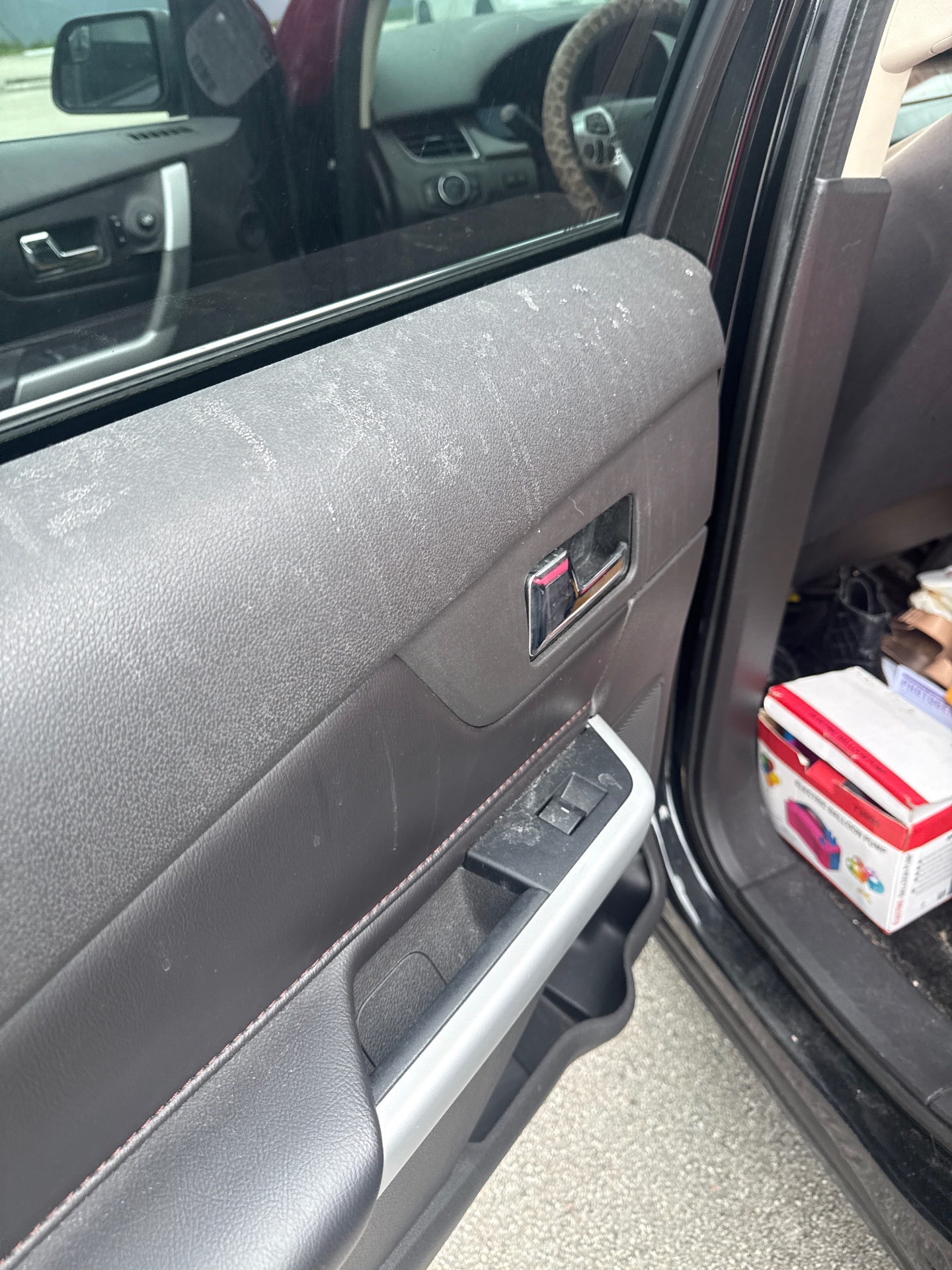
After
True flooded car cleaning isn't just about extracting water and shampooing your carpet. It's a process that starts with identifying the source of the intrusion, repairing it, and then thoroughly drying, cleaning, and treating every affected surface. Skipping the first step is like mopping the floor while the faucet is still running.
At Eco Car Care, we've built our entire water damage service around this philosophy — because anything less is just a temporary fix.
How Does Water Even Get Into a Car in South Florida?
A lot of people assume their car only has a water problem if they drove through a flooded street. And yes, that happens — especially in Broward, Miami-Dade, and Palm Beach counties, where flash flooding during hurricane season can turn a normal road into a river in under an hour. But the truth is, most cars that come to us for water damage never drove through standing water at all.
Water intrusion is far more common — and far more sneaky — than most drivers realize. Here are the most frequent culprits we encounter:
- Worn or cracked door and window seals — Over time, rubber seals dry out and shrink in the South Florida heat, allowing rain to seep in around doors and windows.
- Sunroof drains — Sunroofs have drain tubes that channel water away from the vehicle. When those get clogged with debris, water backs up and drips directly into your headliner or onto your floor.
- Windshield and rear glass seals — Improperly installed or aging windshields are a surprisingly common source of interior leaks.
- Firewall grommets and body plugs — Small rubber plugs and grommets that seal holes in the firewall and floor pan can deteriorate, crack, or even fall out entirely.
- A/C evaporator drain — A clogged evaporator drain will dump condensation onto your passenger-side floor mat instead of outside the car.
- Damaged or missing weather stripping — Around trunk lids, hatchbacks, and convertible tops, degraded weather stripping is an open invitation for rainwater.
The point is this: if your car smells musty, or if you've noticed damp carpet or fogged-up windows that won't clear, you almost certainly have a leak somewhere — even if you've never driven through a flood in your life.
The Real Timeline: Why You Probably Don't Know You Have a Problem Yet
You've probably heard the advice to address water damage within the first 48 hours. In theory, that's correct — mold can begin to develop in as little as 24 to 48 hours in a warm, humid environment. And South Florida's climate? Warm and humid doesn't even begin to cover it.
But here's the reality we see every day: most people don't find out their car has water intrusion until weeks or even months after it started. The water gets in during a rainstorm, soaks into the padding and carpet underneath the surface, and then just… sits there. The car interior dries out on the surface but stays damp underneath — exactly the conditions mold needs to thrive.
The first sign most drivers notice isn't wet carpet. It's a smell. That distinct musty, sour odor that hits you the moment you open the car door. By the time that smell is present, mold is already growing — often hidden under the carpet, inside the seats, or behind door panels where you can't see it.
If that sounds familiar, don't panic — but don't wait any longer either.
Our Approach to Flooded Car Cleaning and Remediation
When you bring your vehicle to us (or when we come to you — we're fully mobile throughout South Florida), we follow a methodical process that actually solves the problem rather than masking it.
Step 1: Leak Detection First
Before we touch the interior, we identify where the water is getting in. We use a combination of water testing, visual inspection, and hands-on assessment to pinpoint every potential entry point. This is the most important step in the entire process. There is absolutely no point in cleaning and drying a car that's going to get wet again the next time it rains.
Step 2: Leak Repair and Sealing
Once we've found the source — whether it's a clogged sunroof drain, a failed window seal, or a compromised windshield gasket — we address it. We clear drain lines, reseal gaps, replace weather stripping, and patch problem areas so the vehicle is weathertight before remediation begins.
Step 3: Deep Water Extraction
We remove standing water and moisture from every layer — carpet, padding, and upholstery. We use professional-grade extraction equipment that goes far deeper than a standard shop vac. If seats or carpet panels need to come out for proper drying, we do that too.
Step 4: Drying and Dehumidification
Industrial air movers and dehumidifiers work together to bring moisture levels in the interior down to safe levels. In South Florida's ambient humidity, this step can't be rushed. We monitor and confirm the environment is genuinely dry — not just dry on the surface.
Step 5: Mold Remediation and Treatment
If mold or mildew is present — and in many cases it is, even when it's not yet visible — we treat all affected surfaces with professional-grade antimicrobial agents that are safe for vehicle interiors. We don't just spray and walk away. We address mold at the source, in the areas where it actually lives.
Step 6: Interior Detail and Odor Elimination
Once the vehicle is dry and treated, we complete a thorough interior detail — cleaning, conditioning, and deodorizing every surface. We use ozone treatment or hydroxyl technology as needed for persistent odors, leaving your car smelling clean and neutral, not just masked with fragrance.
Why South Florida Vehicles Are Especially Vulnerable
Living in Broward, Miami-Dade, or Palm Beach County means your vehicle is constantly exposed to conditions that accelerate wear on seals, gaskets, and weather stripping. The intense UV radiation degrades rubber faster than almost anywhere else in the country. The humidity means that even tiny amounts of moisture that get trapped inside never fully dry out on their own. And the rain — especially during hurricane season — can be intense and relentless.
That combination makes water intrusion not just possible, but genuinely common for South Florida vehicles. Regular inspection of your door seals, sunroof drains, and window gaskets isn't being overly cautious — it's just smart car ownership in this climate.
Don't Ignore the Signs
If you're noticing any of the following, it's time to have your vehicle professionally evaluated:
- A musty or mildewy odor, especially after rain
- Damp or wet floor mats or carpet
- Fogging on the inside of your windows that's hard to clear
- Visible mold spots on seats, carpet, or headliner
- Rust stains appearing on interior metal trim
- Allergy-like symptoms when you're inside your vehicle
These aren't just comfort issues. Mold in a vehicle can have real health consequences, particularly for children, the elderly, and anyone with respiratory sensitivities.
Get It Done Right the First Time
Flooded car cleaning done properly is a comprehensive service — not a quick dry-out and a spray of air freshener. At Eco Car Care, we serve drivers throughout South Florida with a fully mobile setup, meaning we come to your home, office, or wherever your vehicle is located across Broward, Miami-Dade, and Palm Beach counties.
If your car has water damage, don't wait for the smell to get worse. Learn more about our complete car flood damage repair service and find out what a real, lasting solution looks like. Give us a call at (954) 944-2906 and let's talk about what your vehicle needs.
Ready for a Professional Detail?
Book your mobile detail online. We come to you anywhere in South Florida.
Book Mobile Detailing